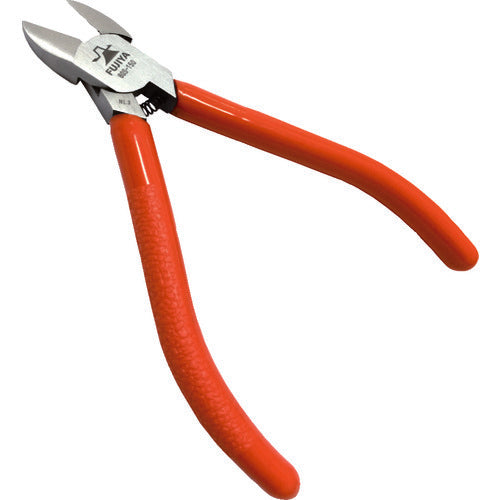
Best Flush Cutters by Job: Electronics, Plastic Models, 3D Prints and Zip Ties
Quick answer: the best flush cutter depends on what you cut
- Electronics leads: a small flush cutter with a lead catcher, such as the KEIBA KM-017H, or a spring-loaded mini cutter like the TTC MC-125.
- Thicker leads, ESD work: a semi-flush ESD cutter such as the ENGINEER NS-04. Semi-flush edges handle thicker wire and resist dulling longer (Aven Tools via DigiKey).
- Plastic models (sprue gates): a plastic-only nipper such as the KEIBA HN-D14 or the single-edge TTC SKN-140. Never cut metal wire with these.
- Resin 3D print supports: the KEIBA UN-E05, made for this job.
- Zip ties: a cutter with an anti-fly function, such as the TTC TH-125NC (a round-blade nipper, not a flush cutter).
- Rule for all of them: the flatter the cut, the softer the material it is made for (Erem, via TEquipment). Do not cut hard or piano wire with a full flush cutter or a plastic nipper.
"Flush cutter" covers several different tools, and thin flush edges can be damaged by hard wire. This guide sorts flush cutters by job, explains the blade types in plain words, and compares eight cutters from Japanese brands using the specifications on their product pages. Sources for the blade-type explanations are listed at the end.
Why look at Japanese flush cutters?
We sell Japanese tools, so this guide covers cutters from Japanese brands only. Here is what they offer, based on what their product pages state rather than general claims about quality:
- Cutters built for one narrow job. KEIBA and TTC sell separate models for plastic only, single-edge finishing cuts, resin 3D print supports, lead trimming with a lead catcher, and zip ties with an anti-fly function. Instead of one cutter for everything, you can pick the one made for your material.
- Cutting capacity stated per material. The pages list capacity separately for copper, soft iron, plastic or resin (for example, TTC MC-125: copper φ1.2 mm, aluminum φ2.0 mm, plastic φ3.0 mm). That makes it easier to stay within what the edge is made for.
- Country of origin, where stated. Four of the eight cutters here list Japan (TTC MC-125, SCN-125, SKN-140 and ENGINEER NS-04). The TTC TH-125NC is made in Thailand, and the KEIBA pages do not state it.
What we do not claim: that Japanese cutters are sharper or last longer than European or American ones. We have not found a test that compares them, so judge each model by its stated specifications.
Flush, semi-flush and full flush: what the names mean
The difference is the bevel (the small angled face) on the cutting edge. It decides how flat the cut end is and how much the tool can cut.
| Edge type | Cut end | Strength and capacity | Best for |
|---|---|---|---|
| Semi-flush | Leaves a small pyramid-shaped tip (a "pinch") | More metal at the edge, so it cuts thicker wire and resists dulling the longest (Aven Tools via DigiKey) | General lead trimming, thicker leads |
| Flush | A much smaller tip than semi-flush | Finer edges, less effort to cut (Erem, via TEquipment) | Electronics, trimming close to a surface |
| Full flush | No pinch; works like two razor blades meeting (Cousins UK) | Least force (Cousins UK); suited to soft wire (Erem, via TEquipment) | Soft wire, plastic, where a flat end matters |
Brands use their own names for these grades, so compare the description, not just the label. In one supplier's comparison chart, the flattest grade is called "Super Full Flush" at Erem, "Ultra-Flush" at Lindström and "Razor Flush" at Tronex, while Tronex uses "Full Flush" for its middle grade (TopAC).
Which do you need? If you cut copper leads and want a clean, flat end, choose flush. If you cut a mix of wire sizes or want the edge to last, choose semi-flush. If you mainly cut plastic, choose a plastic nipper made for it.
The 8 cutters compared
Specs are copied from each product page; "Not confirmed" means the page does not state it. The Job column is our recommendation.
| Model | Job | Edge (as stated) | Stated cutting capacity | Length | Material | Made in |
|---|---|---|---|---|---|---|
| KEIBA KM-017H | Electronics leads | Flush cutter with lead catcher | Soft copper φ0.2–1.2 mm, soft iron φ0.2–0.9 mm, stranded φ0.2–1.2 mm | 128 mm | Stainless steel | Not confirmed |
| TTC MC-125 | Electronics, plastic | Flat blade, spring-loaded | Copper φ1.2 mm, aluminum φ2.0 mm, plastic φ3.0 mm | 126 mm | Carbon steel | Japan |
| ENGINEER NS-04 | ESD work, thicker leads | Semi-flush, spring-loaded, ESD grip | Copper φ2.6 mm, soft iron 1.6 mm | 120 mm | Carbon steel | Japan |
| TTC SCN-125 | Where rust is a concern | Flat blade, lock spring | Copper φ2.0 mm, plastic φ3.0 mm, soft iron φ0.9 mm | 123 mm | Stainless steel (SUS420J2) | Japan |
| KEIBA HN-D14 | Plastic models | Plastic nipper, spring | Plastic only | 115 mm | Maltroy I (CR-V70C) | Not confirmed |
| TTC SKN-140 | Plastic models, finishing cuts | Single-edged, flat blade | Plastic φ3 mm (plastic only) | 140 mm | Stainless steel (SUS420J2) | Japan |
| KEIBA UN-E05 | Resin 3D print supports | Made for support removal | UV-cured resin φ1.0 mm | 122 mm | Stainless steel | Not confirmed |
| TTC TH-125NC | Zip ties, fine wire | Round blade, anti-fly (shatterproof) | Plastic φ2 mm, stranded φ2 mm, cable ties up to 6 mm wide | 129 mm | High-carbon steel | Thailand |
Best flush cutters by job
Electronics: trimming component leads
For through-hole leads you want a small head that reaches between parts and a cut close to the board. Two good options:
- KEIBA KM-017H: a light (36 g) stainless mini cutter with a lead catcher that keeps cut leads from flying. That matters when you trim a whole board and do not want lead ends rolling into the work. Rated for soft copper up to φ1.2 mm.
- TTC MC-125: a 40 g spring-loaded mini cutter, made in Japan, rated for copper up to φ1.2 mm and plastic up to φ3.0 mm. Useful if you cut both leads and small plastic parts.
If you work on static-sensitive boards or cut heavier leads, look at the ENGINEER NS-04. Its page lists a semi-flush blade, a surface resistance of 1 x 10⁶ to 10⁷ Ω and copper capacity up to φ2.6 mm. The semi-flush edge leaves a small tip.
Plastic models: cutting parts from the sprue
Plastic nippers are flush cutters made for plastic only. Their thin edges give a clean gate cut, and they are easy to damage on metal.
- KEIBA HN-D14: a compact 115 mm plastic nipper. KEIBA fixes the coil spring on one side, which it says helps prevent breakage and the spring coming loose. KEIBA states: plastic only, do not cut iron wire.
- TTC SKN-140: a single-edged stainless plastic nipper, rated for plastic up to φ3 mm and marked "for plastic only".
Resin 3D printing: removing supports
The KEIBA UN-E05 is a stainless nipper made for removing supports from resin (stereolithography) prints, rated for UV-cured resin up to φ1.0 mm. KEIBA polished the flat handle faces for a secure grip, and the tool received a 2020 Good Design Award (per the product page).
Filament (FDM) prints are a different case: the stated capacity of the UN-E05 is for UV-cured resin. For FDM supports and stringing, a cutter rated for plastic, such as the TTC MC-125 (plastic φ3.0 mm), fits the stated specifications better.
Zip ties: cutting tails without sharp ends flying
Not a flush-cut tool, but useful next to one: the TTC TH-125NC is a round-blade nipper with a shatterproof (anti-fly) function that keeps cut pieces from flying, with two spare pads included. TTC lists it for cable ties up to 6 mm wide and says it is suitable for ultra-fine wires of 0.1 mm or less. It also has a hole for a fall-prevention strap, useful when you work up a ladder or in a ceiling.
Where rust is a concern
The TTC SCN-125 is a stainless steel (SUS420J2) flush cutter with a lock spring, rated for copper up to φ2.0 mm, plastic up to φ3.0 mm and soft iron up to φ0.9 mm. Stainless steel is the choice when rust is a concern. How its edge life compares with the carbon steel cutters: Not confirmed.
 Electronics leadsKEIBA KM-017H
Stainless, 36 g, lead catcher, soft copper up to φ1.2 mm.
View KM-017H Leads and small plasticTTC MC-125
Spring-loaded, 40 g, copper φ1.2 mm, plastic φ3.0 mm, made in Japan.
View MC-125 ESD, thicker leadsENGINEER NS-04
Semi-flush, ESD grip, copper up to φ2.6 mm, made in Japan.
View NS-04 Plastic modelsKEIBA HN-D14
Compact plastic nipper with a one-side fixed spring. Plastic only.
View HN-D14 Resin 3D printsKEIBA UN-E05
Stainless, made for resin support removal, UV-cured resin up to φ1.0 mm.
View UN-E05
How to choose a flush cutter
- Start with the material. Check the cutting capacity on the product page for the exact material you cut (copper, soft iron, plastic, resin). A cutter rated for plastic only should never touch metal.
- Pick the edge type. Flush or full flush for a flat end on soft material. Semi-flush for thicker or mixed wire and a longer-lasting edge.
- Match the head size to the space. Mini cutters around 115–130 mm reach between components. Longer tools give more leverage but a bigger head.
- Decide on extras. A spring opens the jaws for you on repetitive cuts. A lead catcher or anti-fly function keeps cut pieces from flying. An ESD grip matters on static-sensitive boards.
- Choose the steel. Stainless steel resists rust. Carbon steel is the usual choice for general cutting.
Mistakes that ruin a flush cutter
- Cutting hard or piano wire. Thin flush edges are made for soft material. For hard wire, use a cutter rated for it, such as the KEIBA ET-series piano wire cutters in our nippers and wire cutters collection.
- Going over the stated capacity. Each product page lists a maximum diameter per material. Stay under it.
- Twisting while cutting. Close the handles straight; prying sideways puts load on a thin edge. This is general practice, not a manufacturer statement for these models.
- Using a plastic nipper on metal "just once". KEIBA states plainly for the HN-D14: plastic only, do not cut iron wire.
FAQ
What is the difference between flush cutters and diagonal cutters?
Both cut with angled jaws. "Flush cutter" usually means a small diagonal cutter whose edges are ground to leave a flat (or nearly flat) cut end. Standard bevelled cutters leave a larger pinch on the wire end, need more cutting force and are very durable (Cousins UK).
Are flush cutters good for 3D printing?
Yes, if the cutter is rated for the material. For resin supports, the KEIBA UN-E05 is made for the job (UV-cured resin up to φ1.0 mm). For filament prints, choose a cutter rated for plastic, such as the TTC MC-125 (plastic φ3.0 mm).
Can flush cutters cut steel wire?
Only within the stated capacity, and many cannot. For example, the TTC SCN-125 is rated for soft iron wire up to φ0.9 mm, while the KEIBA HN-D14 and TTC SKN-140 are for plastic only. Hard or piano wire needs a cutter made for it.
Semi-flush or full flush for electronics?
Full flush gives the flattest end on soft leads. Semi-flush leaves a small tip but handles thicker leads and resists dulling longer (Aven Tools via DigiKey).
Related guides
- KEIBA Nippers & Pliers: Pick the Right Cutter for Every Job
- TSUNODA Electrician Wire Cutters & Nippers: A Buyer's Guide by Use Case
- Japanese nippers and wire cutters
- All KEIBA tools
- All TTC (Tsunoda) tools
Find your flush cutter
Browse Japanese flush cutters, plastic nippers and micro cutters from KEIBA, TTC, ENGINEER and FUJIYA.
Shop nippers and wire cuttersSources
- Aven Tools, Understanding Precision Cutters (DigiKey product training), slide 12: semi-flush bevel
- TEquipment, Weller Erem 582E: cut style descriptions (semi-flush, flush, super full flush)
- Cousins UK, Cutting tools: bevelled, semi flush, super flush and full flush cutters
- TopAC, Cutters: cut-type naming by brand
- Product specifications: each linked product page in our store (KEIBA, TTC, ENGINEER).
Last reviewed: October 2026.