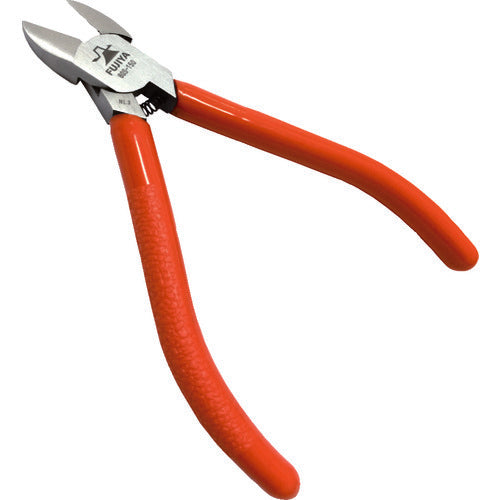
KEIBA Nippers & Pliers: Pick the Right Cutter for Every Job
Quick answer: Most cutter problems come from using one tool for every job. A cutter rated only for soft copper is not meant for piano wire, and a general-purpose cutter is not shaped for plastic gates. KEIBA, a pliers and nippers maker from Sanjo, Japan, publishes a cutting capacity for each material on each tool, which makes it easy to match the tool to the job. This guide walks through six common problems and the KEIBA tool built for each one.
- Piano wire and hard wire: ET-227 / ET-226 / ET-225, or the C-C series clippers
- Wire rope: W-D88
- Electrical work with less hand effort: PHL-119, FC-119 or FCC-119
- Copper cable, clean cut: NH-218 / NH-228
- Plastic gates: PL-726 / PL-716, or the Ergonipper PL-736 family
- Resin 3D-print supports: UN-E05
- Electronics: MN-A05, KM-017H or KMC-037
- Snap rings: SO-907 / SC-917 / S-026
The problem: one cutter for everything
If you keep a single pair of cutters in the toolbox, you have probably run into at least one of these:
- A small notch in the blade after cutting hard wire or spring steel, after which the cutter no longer closes cleanly on thin wire.
- Plastic parts or 3D-print supports that need extra filing because the cut was not close enough to the surface.
- A tired hand or wrist after dozens of repeat cuts.
- Wire rope that frays when you cut it.
None of these means the tool is bad. They usually mean the tool is being used outside what it was designed for. The fix is to know what you are cutting, then pick a tool rated for it.
Who makes KEIBA?
KEIBA is the tool brand of Maruto Hasegawa Kosakujo Inc., based in Sanjo City, Niigata Prefecture, one of Japan's best-known metalworking regions. The company focuses on pliers and nippers, and its catalog says its micro nippers are used by professionals in about 30 countries.
Many KEIBA tools use steel the maker calls Maltroy. The catalog lists two grades: Maltroy I (CR-V70C) and Maltroy II (SK7MF2). Each product's spec line below names the grade where KEIBA lists it.
Rule #1: read the cutting capacity before you buy
Every KEIBA cutter below has a capacity rating for each material it is meant for, such as piano wire, hard wire, soft wire, soft copper, VVF cable or ABS resin. The simplest way to protect a cutting edge is to stay within that number. All figures in this guide come from the KEIBA general catalog.
Problem 1: cutting piano wire, hard wire or wire rope
Why it goes wrong: Hard, springy wire is the fastest way to damage a fine-edged cutter. Choose a tool whose rating actually covers piano wire.

ET-227 / ET-226 / ET-225: European-type heavy duty nippers
European-style nippers with a rounded head and long neck, in Maltroy I. KEIBA rates them for piano wire (SWP-B).
| Model | Length | Piano wire | Soft wire | Stranded wire | Weight |
|---|---|---|---|---|---|
| ET-227 | 199 mm | φ2.0 mm | φ2.6 mm | φ2.6 mm | 240 g |
| ET-226 | 173 mm | φ1.8 mm | φ2.3 mm | φ2.3 mm | 180 g |
| ET-225 | 146 mm | φ1.6 mm | φ2.0 mm | φ2.0 mm | 120 g |

W-D88 wire rope cutter
Use this for wire rope. KEIBA states the cut wire does not fray, and the spring opens the jaws when you release your grip. Rated for wire rope φ5 mm, iron wire φ4 mm and hard wire φ2.5 mm. 193 mm, 255 g.
View W-D88
C-C08 / C-C18 / C-C28 small clippers
Compact clippers with a handle lock for storage and a hand strap. All three are rated for hard wire φ2.9 mm, piano wire φ2.3 mm and soft wire φ3.2 mm, and weigh 280 g. KEIBA notes they are not suited to very fine wire. Choose by blade: C-C08 flat blade (212 mm, SK5 blade), C-C18 40° angled blade (210 mm) or C-C28 end-cut (210 mm).
View C-C08Problem 2: electrical work that wears out your hand
Why it goes wrong: Cutting multi-core cable over and over with short, standard pliers takes a lot of grip force.

High-leverage lineman's pliers
On KEIBA's high-leverage pliers (KEIBA alpha), the pivot sits closer to the cutting edge than on standard pliers, and the long blade cuts 3-core VVF cable in one go. The PH-108 is a standard electrician's plier with a thick PVC handle that KEIBA describes as easy to hold with thick gloves. The PHL-118/119 series received a 1996 Good Design Award.
| Model | Feature | Length | Cutting capacity | Weight |
|---|---|---|---|---|
| PHL-119 | Molded handle | 223 mm | Piano φ2.0 / iron φ3.4 / VVF 3-core 2.6 | 415 g |
| FC-119 | High Grade, gunmetal sandwich pivot | 223 mm | Piano φ2.0 / iron φ3.4 / VVF 3-core 2.6 | 416 g |
| FCC-119 | High Grade, 2-component handle, lanyard attachable | 223 mm | Piano φ2.0 / iron φ3.4 / VVF 3-core 2.6 | 412 g |
| PHL-129-C | High-leverage with crimper | 245 mm | Piano φ2.0 / iron φ3.4 / VVF 3-core 2.6 | 495 g |
| PH-108 | Thick PVC handle | 213 mm | Hard φ2.3 / soft φ3.2 / stranded φ3.2 | 400 g |

NH-218 / NH-228 electrician's thin-blade nippers
Spring-loaded, with an acute blade angle and a long blade for 3-core VVF cable. Rated for soft iron φ2.5 mm, soft copper φ3.5 mm and VVF 3-core 2.6 mm; 203 mm, 305 g. They are not rated for hard wire, so pair them with a tool from Problem 1 for that. NH-218 has a standard blade, NH-228 a flat blade.
View NH-218
WS-006 VVF wire stripper
Made only for VVF cable: 2-3 core, 1.6-2.0 mm conductors (3-core cable at 1.6 mm only). KEIBA notes it has been used in Japan's electrician skills exam. 170 mm, 140 g.
View WS-006Note for buyers outside Japan: VVF is the flat PVC-sheathed cable used in Japanese buildings. KEIBA states ratings in VVF and metric conductor sizes, so check your own cable's conductor diameter against the rating before you buy.
Problem 3: plastic parts that need filing after every cut
Why it goes wrong: General-purpose cutters are not shaped for plastic gates and sprues.

PL-726 / PL-716 plastic nippers
The blade runs to the joint, so you can push the part deep into the jaws and still cut. Spring-loaded, Maltroy I, rated for ABS φ5.0 mm; 156 mm, 130 g. The full-flush blade is for plastic only, not metal wire. PL-726 has a flat blade, PL-716 a standard blade.
View PL-726
Ergonipper PL-736 / PL-746 (and left-handed versions)
An ergonomic design that keeps the blade, wrist and working position in line, which KEIBA says reduces fatigue over long sessions. 1991 Good Design Award. Rated for ABS φ5.0 mm; 154 mm, 125 g. PL-736 standard blade and PL-746 flat blade for right-handed users; PL-736L and PL-746L for left-handed users.
View PL-736
HN-D14 and UN-E05
The HN-D14 is a compact Pro-Hobby plastic nipper (115 mm, 52 g). Its spring is fixed on one side, which KEIBA says helps prevent breakage and the spring coming loose. It is for plastic only. The UN-E05 is a stainless steel nipper for removing supports from resin (stereolithography) 3D prints, rated for UV-cured resin φ1.0 mm; 122 mm, 48 g, 2020 Good Design Award.
View UN-E05Problem 4: electronics and fine work

MN-A05 micro nippers
Spring plus a side stopper that keeps the jaws from opening too wide. KEIBA's quality test is 100,000 continuous cuts of 0.8 mm enamelled copper wire. Rated for soft iron φ1.6 mm and soft copper φ0.2-2.0 mm; 128 mm, 70 g.
View MN-A05
Keiba Mini KM-017H and KMC-037 (stainless)
Light stainless nippers rated for soft iron φ0.2-0.9 mm and soft copper φ0.2-1.2 mm. The KM-017H (36 g) has a soft vinyl handle and a lead catcher that keeps cut leads from flying. The KMC-037 (52 g) has a two-component handle.
View KM-017H
Tweezers and ring opener
- TS-5-S precision tweezers: SUS316L stainless (non-magnetic, acid-resistant), 110 mm, made in Switzerland.
- TC-B01 ceramic tip tweezers: zirconia tips on an aluminium alloy body, bent (crane-neck), 145 mm. KEIBA lists them as non-magnetic, insulating and heat resistant to 700 °C, with solder and silver braze hard to stick.
- HOC-D04 Pro-Hobby ring opener: for jewelry and craft work, with a cutting blade (soft iron φ1.2 mm, soft copper φ1.4 mm); 126 mm, 66 g.
Problem 5: snap rings that slip off the plier tips

SO-907 (external) and SC-917 (internal)
The claw tips are back-tapered so they catch the ring securely, and the claws can be swapped by loosening a screw. With the standard claws, both cover rings of 20-60 mm; with KEIBA's precision claws (sold separately), 12-26 mm. SO-907: shaft, 169 mm, 170 g. SC-917: bore, 176 mm, 160 g.
View SO-907
S-026 4-in-1
One tool covers shaft and bore rings, straight or bent, for 10-40 mm rings: the two claw pairs move in opposite directions when you squeeze. 143 mm, 85 g. 1982 Good Design Award and 1996 Long Life Design Award.
View S-026Problem 6: a spring-loaded tool that stopped springing back
You may not need a new tool. KEIBA sells replacement spring packs, and its catalog lists which models each pack fits. Check that your model number is on the list.
 KEIBA SS-13 Replacement Leaf Springs for Pro-Hobby 2-Component Pliers (5 Sets)
- SS-13 (leaf springs, 5 sets): Pro-Hobby two-component pliers, including HAC-D04, HKC-D04, HCC-D04, HPC-D04, HNC-D34, HOC-D04, HSC-D04, HNC-D04, HNC-D14 and HTC-D04.
- SS-12 (coil springs, 5 pcs): PL-714/715/716, PL-724/725/726, PL-736/746, PL-736L/746L, NH-E16, NH-E26.
- SS-14 (coil springs, 5 pcs): PL-717, PL-727, NH-E17, NH-218, NH-E27, NH-228.
- SS-18 (coil springs, 5 pcs): MN-A04, MN-A05, MN-B05, M-616, M-616B.
- SS-28 (springs, 5 pcs): S-026, S-027, S-025N.
SS-12, SS-14, SS-18 and SS-28 are not currently in our store. Message us with your model number if you need one.
Using them right: how to make a cutter last
- Stay within the rating for that material. Ratings differ by material. The NH-218, for example, is rated for soft copper φ3.5 mm but has no rating for piano wire. Do not cut materials that are not listed.
- Cut straight, don't twist. Keep the material square to the blade and squeeze. Twisting or prying puts sideways load on the edge.
- Cut firmer material closer to the pivot. The closer the material is to the pivot, the less hand force you need.
- Wear eye protection. Cut wire ends can fly. For many component leads, the lead-catcher KM-017H helps.
- Turn the power off first. Do not use these tools on live circuits.
Quick selection table
| Your job | KEIBA model | Key rated capacity |
|---|---|---|
| Piano wire | ET-227 | Piano wire φ2.0 mm (0.079 in) |
| Wire rope | W-D88 | Wire rope φ5 mm (0.197 in) |
| Cable, less hand effort | FCC-119 / PHL-119 | Iron wire φ3.4 mm (0.134 in), VVF 3-core 2.6 mm |
| Copper cable, clean cut | NH-218 / NH-228 | Soft copper φ3.5 mm (0.138 in) |
| Plastic gates | PL-726 / PL-736 | ABS φ5.0 mm (0.197 in) |
| Resin 3D-print supports | UN-E05 | UV resin φ1.0 mm (0.039 in) |
| Electronics leads | MN-A05 / KM-017H | Soft copper up to φ2.0 / φ1.2 mm (0.079 / 0.047 in) |
| Snap rings | SO-907 / SC-917 | 20-60 mm with standard claws (0.79-2.36 in) |
Inch values are converted from KEIBA's metric ratings (1 mm = 0.0394 in).
 KEIBA ET-227 European-Type Heavy Duty Diagonal Cutters for Piano Wire, 200 mm
 KEIBA W-D88 Wire Rope Cutter with Spring, 190 mm
FAQ
Flat blade or standard blade?
Many KEIBA nippers come in both versions with the same rating, such as the PL-716/PL-726 and NH-218/NH-228. As a general guide, choose flat for the flattest cut face, as on visible plastic parts, and standard for everyday cutting.
What is the difference between Maltroy I and Maltroy II?
They are the two steel grades KEIBA lists in its catalog: Maltroy I is CR-V70C and Maltroy II is SK7MF2. In this guide, the ET series, W-D88, PHL-119, FC-119, NH series, PL plastic nippers, HN-D14 and MN-A05 use Maltroy I; the PH-108, PHL-129-C and snap ring pliers SO-907/SC-917 use Maltroy II.
Are there left-handed options?
Yes. The PL-736L and PL-746L Ergonippers are made for left-handed users.
Where are these made?
KEIBA is based in Sanjo, Japan. The KEIBA catalog lists the TS series precision tweezers as made in Switzerland.
Related guides
- TSUNODA electrician wire cutters and nippers by use case
- Japanese alternatives to KNIPEX
- 5 everyday electrician problems, solved by VESSEL
Not sure which KEIBA cutter fits?
Tell us the material and thickness you cut most often, and we will help you choose a model.
Browse Japanese nippers & wire cuttersSources
- KEIBA general catalog (Maruto Hasegawa Kosakujo, PDF) (lengths, weights, cutting capacities, steel grades, spring compatibility, awards)
- KEIBA brand page (Maruto Hasegawa Kosakujo) (company name and location)
Specifications may change. Always confirm current specifications with the manufacturer. Last reviewed: October 2026.