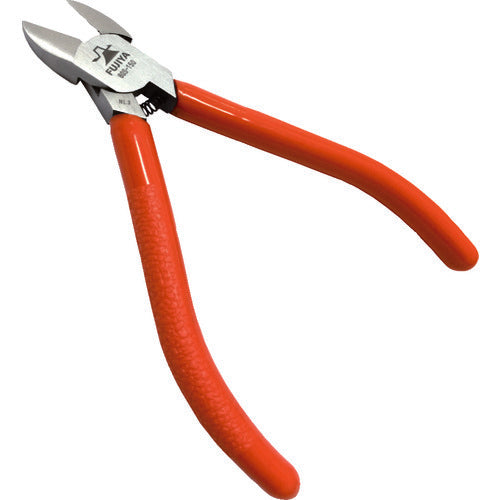
Best Cable Cutter for Your Cable Size: Copper Power Cable, Wire Rope and Hard Wire
Quick answer: pick a cable cutter by what you cut and how thick it is
- Copper building wire and cable up to 22 mm² (cable up to about φ9 mm): a hand-size cutter such as the TTC CA-22 (162 mm, 140 g) or the spring-loaded CA-22S.
- Up to 38 mm² (about φ11 mm): the TTC CA-38 or FUJIYA 600-210.
- Up to 60 mm² (about φ13 mm): the TTC CA-60, the thicker single-stage blade of the TTC OCA-60, or the FUJIYA 600-240.
- Steel wire rope: not a job for a copper cable cutter. Use a wire rope cutter such as the TTC WC-150 or WC-200.
- Piano wire and hard steel wire: a hard wire cutter such as the TTC PC-1100.
- The rule: match the tool to the material, then to the size. Klein Tools, for example, prints "Do NOT cut steel or ACSR" on its copper and aluminum cable cutters, and sells separate shears for steel and ACSR.
"Cable cutter" covers three different tools: shear cutters for soft copper cable, wire rope cutters for steel rope, and hard wire cutters for piano wire. Many "best cable cutter" lists rank one model against another. This guide starts one step earlier: what you are cutting and how thick it is. Then it matches 13 cutters from Japanese brands to each job, using the specifications on their product pages. Sources are listed at the end.
Why look at Japanese cable cutters?
We sell Japanese tools, so this guide covers Japanese brands only. Here is what they offer, based on what the maker's catalog and our product pages state rather than general claims about quality:
- Capacity stated by cable type and size. TTC (Tsunoda) and FUJIYA rate their cutters in mm² of IV wire and in cable diameter, and TTC also lists flat VVF cable (for example, CA-22: IV 22 mm², cable φ9 mm, VVF 2.0 mm × 3 cores).
- Two blade designs for copper cable. TTC's catalog describes a slim two-stage blade with a tip blade for stripping insulation, and a thick single-stage blade that it describes as highly durable and suited to heavier cable (OCA-60).
- Separate tools for steel. TTC sells wire rope cutters (WC series) and a hard wire cutter (PC-1100) alongside its copper cable cutters, each with its own stated capacity.
- Country of origin, where stated. All 12 TTC and FUJIYA cutters in this guide list Japan on their product pages. The KEIBA W-D88 page names the maker in Sanjo, Japan, but does not state the country of manufacture.
What we do not claim: that these cutters cut better or last longer than American or European cutters. We have not found a test that compares them, so choose by material and size.
Step 1: what are you cutting?
| Material | Tool type | In this guide |
|---|---|---|
| Copper power or building cable (single wires, flat cable, sheathed multi-core cable) | Cable cutter with curved shear blades | TTC CA-22, CA-22S, CA-38, CA-60, OCA-60, OH-60; FUJIYA 600-160, 600-210, 600-240 |
| Steel or stainless wire rope | Wire rope cutter | TTC WC-150, WC-200; KEIBA W-D88 |
| Piano wire, hardened steel wire | Hard wire cutter | TTC PC-1100 |
Why not one tool for everything? A copper cable cutter is built to shear soft conductors. TTC's catalog explains that its curved blades wrap around the cable and cross like scissors, so the cut is clean and the cable is not crushed the way it is with pliers. Klein Tools prints "Do NOT cut steel or ACSR" on its copper and aluminum cable cutters and sells separate shears for steel. The TTC and FUJIYA cable cutters here list copper cable types only (IV, VVF, CV and similar), so do not use them on wire rope or piano wire.
Step 2: how thick is the cable? (mm² vs AWG)
The cutters in this guide are rated in mm² of IV wire, a Japanese 600 V PVC-insulated wire made to JIS C 3307, plus a maximum cable diameter. If your cable is sized in AWG, this table gives the nearest standard AWG sizes by cross-section (Engineering ToolBox):
| Cutter rating | Nearest AWG sizes by cross-section | Stated cable diameter |
|---|---|---|
| IV 22 mm² | 4 AWG is 21.1 mm², 3 AWG is 26.7 mm² | φ9 mm (TTC) / φ9.2 mm (FUJIYA, TTC OH-60) |
| IV 38 mm² | 2 AWG is 33.6 mm², 1 AWG is 42.4 mm² | φ11 mm (TTC) / φ11.4 mm (FUJIYA) |
| IV 60 mm² | 1/0 AWG is 53.5 mm², 2/0 AWG is 67.4 mm² | φ13 mm (TTC) / φ13.6 mm (FUJIYA) |
The ratings are for the cable types listed on each product page. Insulation thickness and stranding vary between cables, so also compare your cable's outside diameter with the stated diameter, and stay within it. FUJIYA's instructions, as listed by MISUMI, say not to use the cutter beyond its capacity. Cutting aluminum cable is Not confirmed on these product pages.
The 13 cutters compared
Specs are copied from each product page. Blade type is listed only where the page or TTC's catalog states it.
 TTC Tsunoda CA-22 Yellow Shark Cable Cutter, 22 mm² (OAL 162 mm)
 TTC Tsunoda CA-22S Yellow Shark Cable Cutter, 22 mm², Spring-Loaded (OAL 162 mm)
| Model | For | Stated capacity | Blade / feature | Length | Weight |
|---|---|---|---|---|---|
| TTC CA-22 | Copper cable | IV 22 mm², cable φ9 mm, VVF 2.0 × 3 cores | Two-stage blade | 162 mm | 140 g |
| TTC CA-22S | Copper cable | IV 22 mm², cable φ9 mm, VVF 2.0 × 3 cores | Spring-loaded | 162 mm | 140 g |
| TTC CA-38 | Copper cable | IV 38 mm², cable φ11 mm, VVF 2.6 × 3 cores | Two-stage blade | 210 mm | 250 g |
| TTC CA-60 | Copper cable | IV 60 mm², cable φ13 mm, VVF 2.6 × 3 cores | Two-stage blade | 237 mm | 330 g |
| TTC OCA-60 | Copper cable | IV 60 mm², cable φ13 mm, VVF 2.6 × 3 cores | Single-stage blade | 232 mm | 435 g |
| TTC OH-60 | Copper and communication cable | IV 22 mm² (φ9.2 mm), communication cable 20 mm | One-hand cutter, made to order | 237 mm | 380 g |
| FUJIYA 600-160 | Copper cable | IV 22 mm² (φ9.2 mm) | High-carbon steel | 160 mm | 170 g |
| FUJIYA 600-210 | Copper cable | IV 38 mm² (φ11.4 mm) | High-carbon steel | 210 mm | 320 g |
| FUJIYA 600-240 | Copper cable | IV 60 mm² (φ13.6 mm) | High-carbon steel | 240 mm | 465 g |
| TTC WC-150 | Wire rope | Wire φ4 mm, stainless wire φ3 mm | Special alloy steel blade | 167 mm | 215 g |
| TTC WC-200 | Wire rope | Wire φ5 mm, stainless wire φ4 mm | Special alloy steel blade | 202 mm | 345 g |
| KEIBA W-D88 | Wire rope | Wire rope φ5 mm, iron wire φ4 mm, hard wire φ2.5 mm | Spring-loaded | 193 mm | 255 g |
| TTC PC-1100 | Hard wire | Hardened steel φ1.6 mm, piano wire φ0.8 mm, copper wire φ5.0 mm, soft iron wire φ4.0 mm | Special alloy steel blade | 220 mm | 265 g |
Insulated (VDE / 1000 V rated) handles: none of these cutters is listed as insulated. RS lists the TTC CA-22S as not VDE/1000 V certified. Cut only cable that has been de-energized.
Best cable cutter by job
Everyday electrical work: cable up to 22 mm²
- TTC CA-22: hand size at 162 mm and 140 g. TTC's catalog rates it for IV 22 mm², VVF 2.0 mm × 3 cores, CV 3.5 mm², VVR 8 mm² and VCTF 1.25 mm² × 4 cores, and says the slim two-stage blade has a tip blade for stripping insulation.
- TTC CA-22S: the same rated sizes with a spring. TTC's catalog says it can be stored closed and unlocks when you squeeze the handles, to reduce fatigue on repeated cuts.
- FUJIYA 600-160: IV 22 mm² (φ9.2 mm) in a 160 mm, 170 g body of high-carbon steel.
Heavier feeder cable: up to 38 mm²
- TTC CA-38: IV 38 mm² and cable up to φ11 mm, 210 mm and 250 g.
- FUJIYA 600-210: IV 38 mm² (φ11.4 mm), 210 mm and 320 g.
Thick cable: up to 60 mm²
- TTC CA-60: IV 60 mm² and cable up to φ13 mm. At 330 g it is the lightest 60 mm² cutter here.
- TTC OCA-60: the same rated IV size with a single-stage blade. TTC's catalog describes this blade as thick and highly durable, and suited to thicker cable. It weighs 435 g.
- FUJIYA 600-240: IV 60 mm² (φ13.6 mm), 240 mm and 465 g. MISUMI's listing describes it as a cutter for cable work such as telephone installation, and says it can also cut rubber and urethane rods and pipes.
For cable thicker than 60 mm² (2/0 AWG and up), you need a larger or ratcheting cable cutter. We do not currently stock one.
One-hand cutting
The TTC OH-60 is listed as a one-hand cable cutter for communication cable up to 20 mm and IV 22 mm² (φ9.2 mm). The product page lists it as made to order, so allow extra time.
Steel wire rope
- TTC WC-150: wire rope up to φ4 mm (stainless φ3 mm), 167 mm.
- TTC WC-200: up to φ5 mm (stainless φ4 mm), 202 mm.
- KEIBA W-D88: wire rope up to φ5 mm, with a spring that opens the jaws. KEIBA states that rope cut with it does not fray.
For thicker rope, TTC also makes the WC-225, WC-450 and WC-600, listed in our cable and bolt cutters collection.
Piano wire and hard wire
The TTC PC-1100 is rated for hardened steel up to φ1.6 mm and piano wire up to φ0.8 mm, as well as copper wire up to φ5.0 mm. Keep piano wire away from your copper cable cutter.


How to choose a cable cutter
- Name the material: soft copper cable, steel wire rope or hard wire. This decides the tool type.
- Check the size: find your cable's mm² (or AWG) and outside diameter, and pick a cutter whose stated capacity covers both.
- Leave a margin for your thickest cable: as a rule of thumb (our advice, not a maker's rating), avoid working at the tool's limit every day. If your largest cable is close to 22 mm², consider the 38 mm² size.
- Think about weight and reach: the CA-22, CA-22S and 600-160 weigh 140 to 170 g; the 60 mm² cutters weigh 330 to 465 g and are 232 to 240 mm long, which gives more leverage.
- Spring or no spring: a spring (CA-22S, KEIBA W-D88) opens the jaws for you on repeated cuts.
- Work safely: de-energize the cable first, and wear eye protection, as FUJIYA's instructions advise.
FAQ
What is the best cable cutter for an electrician's tool bag?
For most building wire, a hand-size cutter rated around 22 mm² covers the common sizes. The TTC CA-22 is rated for IV 22 mm² and VVF 2.0 mm × 3 cores at 140 g. If you regularly cut feeder cable, add a 38 or 60 mm² cutter.
Can a cable cutter cut steel wire rope?
Not a copper cable cutter. Klein Tools prints "Do NOT cut steel or ACSR" on its copper and aluminum cable cutters, and the TTC and FUJIYA cable cutters here list copper cable types only. Use a wire rope cutter such as the TTC WC-150 or WC-200.
What size cable cutter do I need for 2/0 AWG?
2/0 AWG is 67.4 mm² (Engineering ToolBox), which is above the 60 mm² rating of the largest cutters in this guide. You need a larger or ratcheting cable cutter for that size.
What is the difference between a cable cutter and diagonal cutters?
Diagonal cutters (nippers) pinch the wire between two edges. TTC's catalog explains that a cable cutter's curved blades wrap around the cable and cross like scissors, so the cable is cut cleanly instead of being crushed, as it can be with pliers. For small wire, see our TSUNODA nippers guide.
Can these cutters be used on live cable?
No. None of them is listed as an insulated tool, and RS lists the TTC CA-22S as not VDE/1000 V certified. Klein Tools advises de-energizing lines before working on them whenever possible.
Related guides
- TSUNODA Electrician Wire Cutters & Nippers: A Buyer's Guide by Use Case
- Japanese Electrician Tools: 8 Brands to Know and What Each One Makes
- Japanese Alternatives to Klein Tools: Lineman's Pliers, Wire Strippers and Testers
- KEIBA Nippers & Pliers: Pick the Right Cutter for Every Job
- Japanese cable and bolt cutters
- Japanese wire strippers
- All TTC (Tsunoda) tools
Find your cable cutter
Browse cable cutters, wire rope cutters and bolt cutters from TTC, FUJIYA and KEIBA.
Shop cable cuttersSources
- TSUNODA (TTC) catalog, cable cutter pages: Yellow Shark CA-22 / CA-22S / CA-38 / CA-60 / OCA-60 (PDF, via distributor)
- Klein Tools catalog, cable cutters (PDF, via Elliott Electric)
- Klein Tools J63215 product warnings (via The Power Tool Store)
- Engineering ToolBox, AWG wire gauge to mm² table
- MISUMI, FUJIYA 600-240 cable hand cutter (Japanese)
- RS, TTC CA-22S specifications
- IV / HIV 600 V PVC-insulated wire data sheet, JIS C 3307 (Japanese, PDF)
- Product specifications: each linked product page in our store (TTC, FUJIYA, KEIBA).
Last reviewed: October 2026.